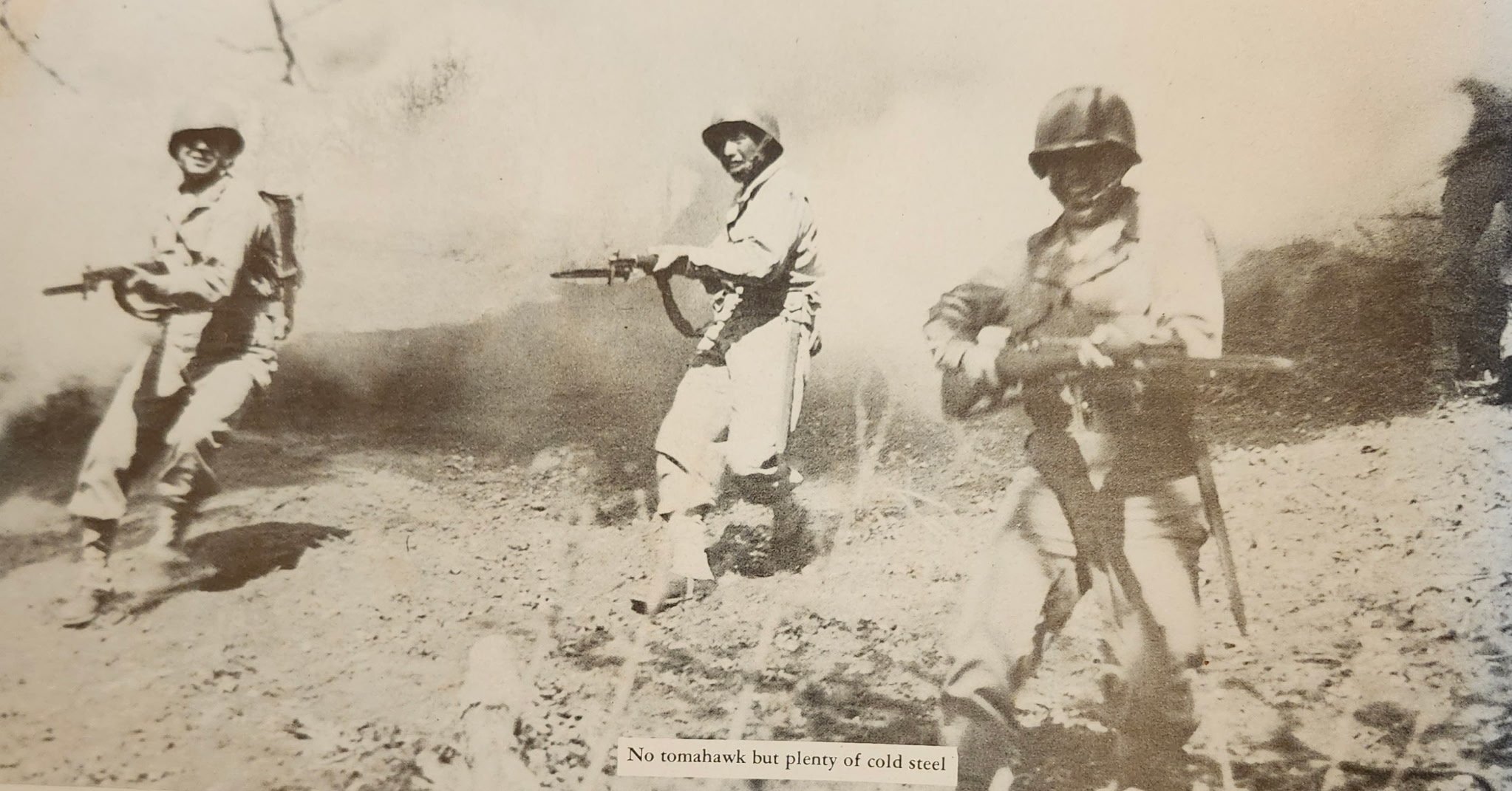
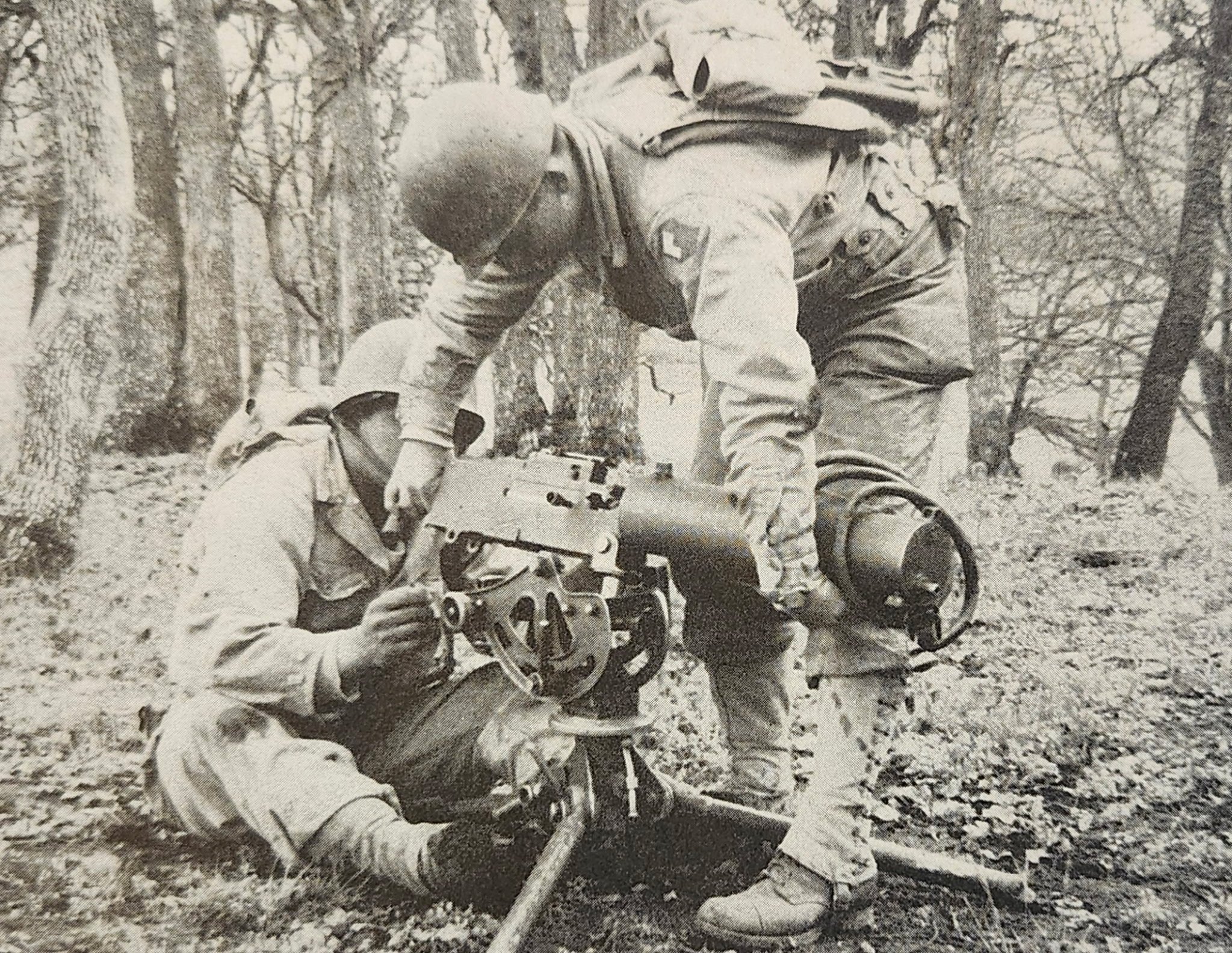
For the thousands of soldiers who passed through Camp Adair during World War II, learning to use the rifle was one of the most important parts of military training. Marksmanship was not simply a matter of learning to fire a weapon on a fixed range. Soldiers were expected to become familiar with their weapons, understand how to use them under changing battlefield conditions, and be prepared to pick up and use weapons other than their own.
Familiarization Firing
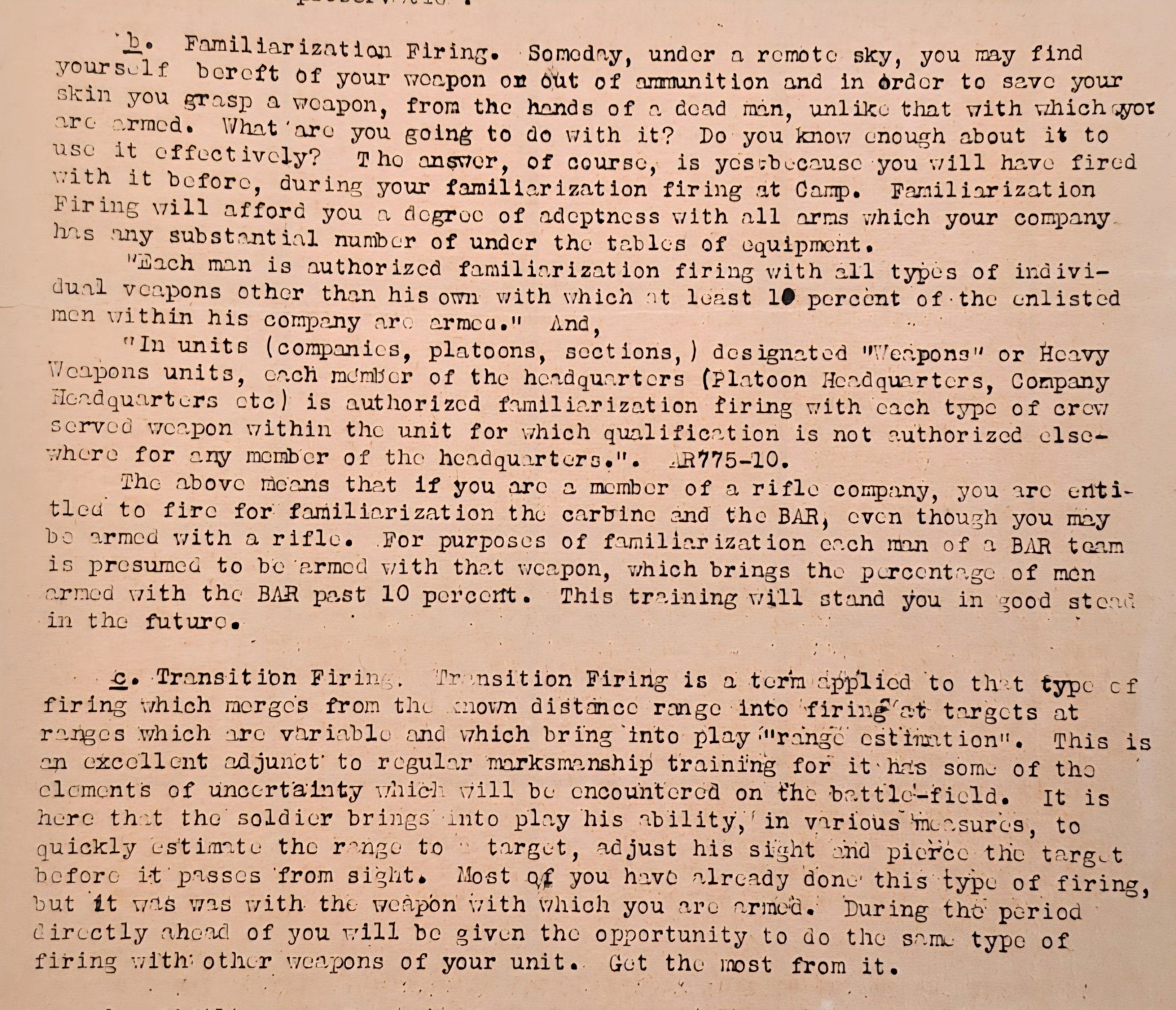
Camp Adair's training program included what the Army called “familiarization firing.” The purpose was straightforward: a soldier might someday find himself separated from his normal weapon or ammunition and be forced to use whatever weapon was available.
Army training instructions emphasized that soldiers should receive familiarization firing with individual weapons other than their own. A rifleman, for example, could be required to fire weapons such as the carbine and Browning Automatic Rifle (BAR) even though his normal issue weapon was the rifle.
The Army regulations specifically provided that soldiers in a rifle company were entitled to familiarization firing with the carbine and BAR. This was particularly important because weapons were distributed throughout the rifle squad and platoon, and a soldier might have to take over another man's weapon during combat.
For soldiers assigned to weapons or heavy-weapons units, familiarization firing extended to the crew-served weapons used within their organization.
The lesson was more than simply learning how to pull the trigger. Soldiers were being prepared for the uncertainty of combat, where equipment could be damaged, ammunition could run short, and casualties could leave weapons without their original operators.
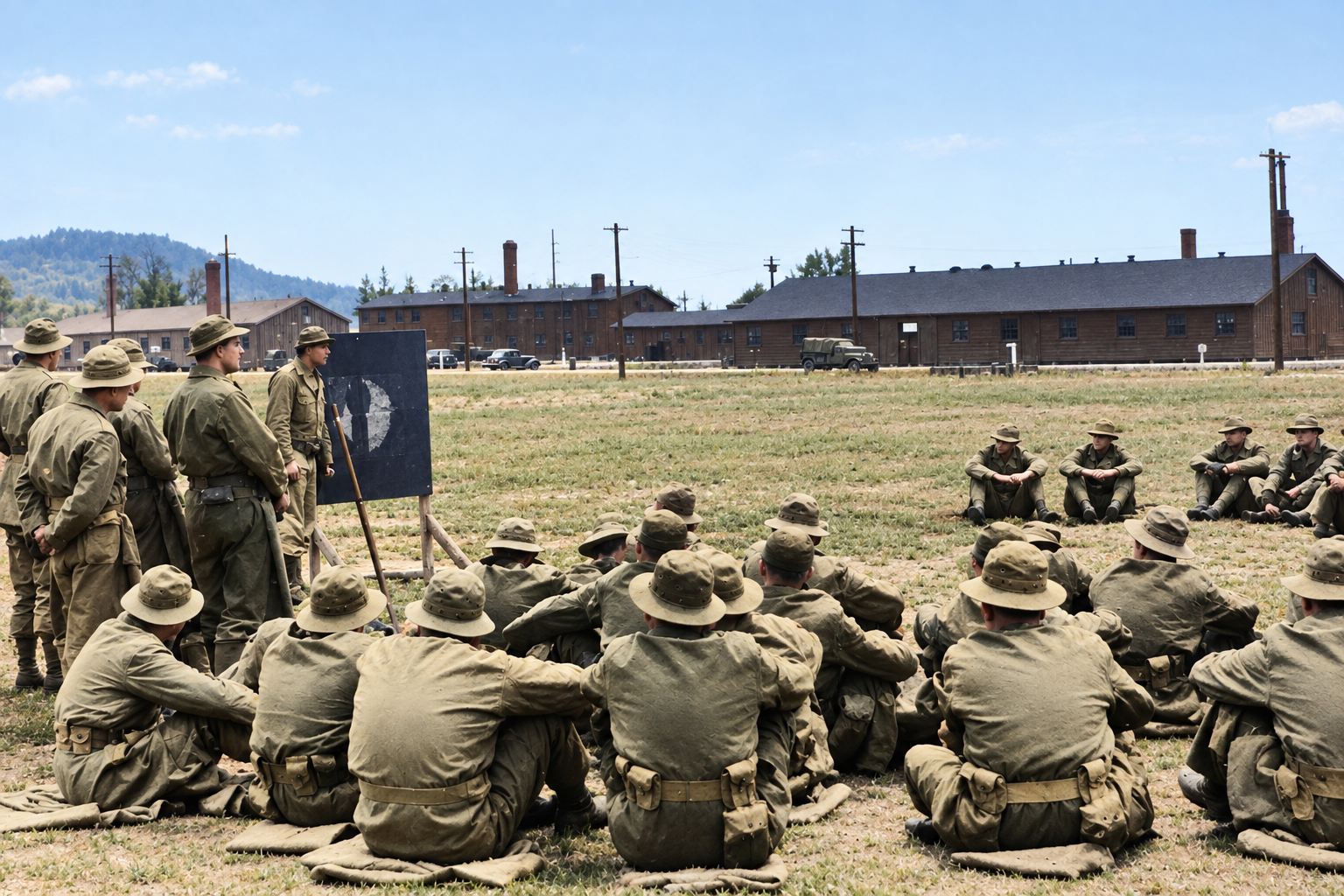
Transition Firing
Another important part of the training was transition firing.
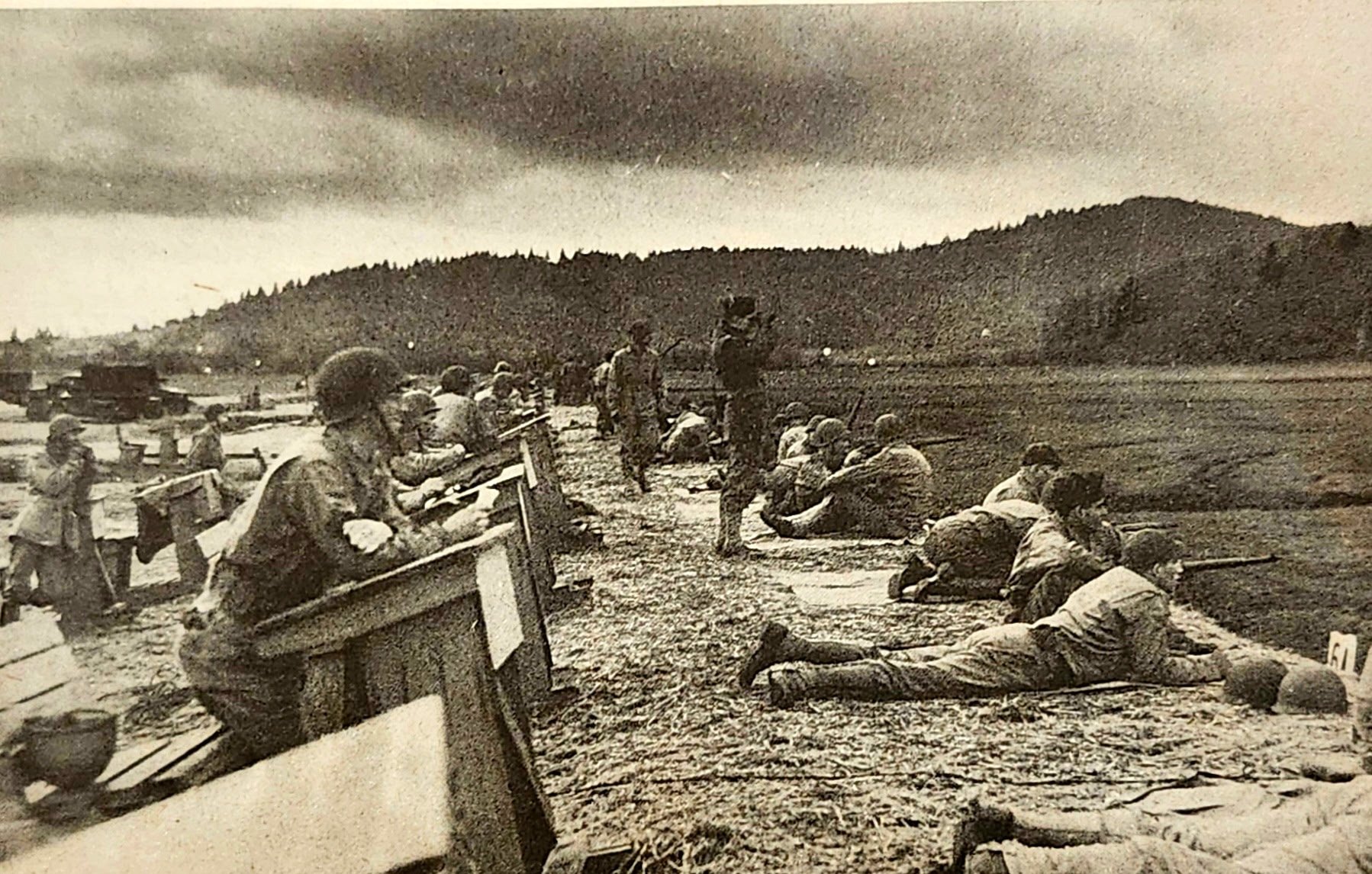
Unlike ordinary range practice, transition firing introduced an element of uncertainty. Soldiers moved from known-distance firing ranges to targets placed at variable and unfamiliar distances. They had to estimate the range to the target, adjust their sights accordingly, and engage the target before it disappeared from view.
The Army training material described transition firing as an excellent supplement to regular marksmanship training because it introduced some of the uncertainty that a soldier could encounter on the battlefield.
A soldier could no longer simply depend upon knowing that his target was at a predetermined distance. Instead, he had to look at the target and make a rapid judgment:
How far away is it?
That estimate affected how the soldier adjusted his sights and employed his rifle.
Training for the Battlefield
This type of training was intended to bridge the gap between the controlled environment of the firing range and the unpredictable conditions of combat.
At Camp Adair, soldiers trained not only to become accurate marksmen but also to become adaptable soldiers. They learned their individual weapons, practiced with other weapons in their unit, and were introduced to situations in which they had to make quick decisions about range and sight adjustment.
The Army understood that combat would not provide the neatly measured distances of a familiar firing range. Targets might appear unexpectedly, ranges could vary, and a soldier might have only a few seconds to react.
For the soldier preparing for combat at Camp Adair, rifle training was therefore about much more than marksmanship. It was preparation for the moment when training had to become instinct.
The lessons of familiarization and transition firing helped prepare Camp Adair's soldiers for the realities they would eventually encounter overseas—where knowing how to use a rifle, how to judge distance, and how to make use of whatever weapon was available could become a matter of survival.