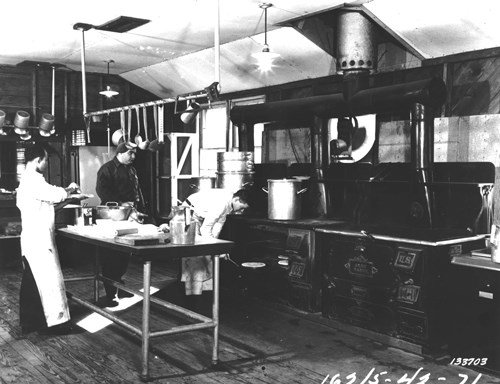
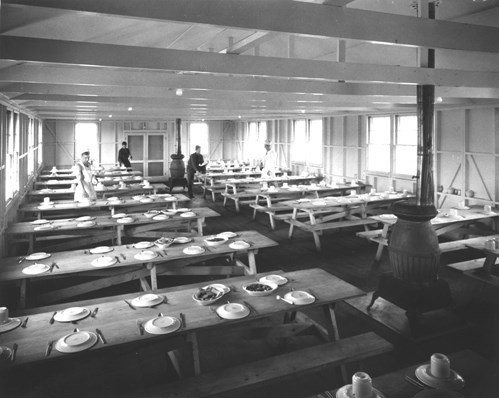
Camp Adair had a large number of mess halls to feed the thousands of soldiers stationed on the post. More than 170 buildings were constructed for mess hall use, ensuring that every unit had access to regular meals. Even the post stockade had its own dedicated mess hall, which featured a larger dining area to accommodate the men confined there.
The mess halls served breakfast, lunch, and dinner every day of the week while also preparing special meals for holidays. Army bakers produced fresh bread, cakes, and other baked goods to support daily operations and celebrate special occasions. Feeding approximately 40,000 soldiers each day, seven days a week, the mess halls were one of the most essential services at Camp Adair, keeping the troops well-fed and ready for training and duty.
Army Rations at Camp Adair
After World War I, the U.S. Army continued to revise its ration system. By World War II, the Army had developed several different types of rations, each designed for specific circumstances. These included the A-ration, B-ration, C-ration, K-ration, and D-ration.
At Camp Adair, the two most important types were the A-ration and B-ration. Because Camp Adair was a large, permanent training installation with established mess halls, kitchens, refrigeration, and food-storage facilities, soldiers could receive meals prepared from a combination of fresh and preserved foods.
A-Rations and B-Rations Working Together
A common misconception is that soldiers were served either an entirely A-ration meal or an entirely B-ration meal. In reality, A- and B-ration components could be used together when planning and preparing meals.
The A-ration provided foods that were fresh, refrigerated, or frozen, such as fresh meats, vegetables, fruits, dairy products, and other perishable foods. B-ration foods consisted primarily of canned, packaged, dried, or otherwise preserved items that could be stored without refrigeration.
Army cooks could combine available A- and B-ration components to create complete, nutritious meals for soldiers.
For example, a meal could include fresh meat and vegetables supplied as A-ration components, along with canned or preserved foods supplied through the B-ration system. Bread, canned goods, preserved fruits and vegetables, and other nonperishable items could supplement the fresh foods available to the kitchen.
This flexibility was particularly important to the Army's food-service system. The availability of fresh food could vary depending on supply conditions, transportation, storage capacity, and the location of the unit. By combining fresh and preserved foods, Army cooks could continue producing substantial meals even when some fresh ingredients were unavailable.
At Camp Adair, this system allowed the Army's mess personnel to take the food available through the supply system and turn it into the meals served to thousands of soldiers every day.
Feeding Soldiers at Camp Adair
Camp Adair's mess halls were an important part of daily military life. Army cooks and mess personnel prepared meals in large quantities, using whatever combination of A- and B-ration components was available to produce the day's menu.
The process required a tremendous logistical operation. Food had to be ordered, transported to Camp Adair, unloaded, inspected, stored, refrigerated when necessary, issued to the kitchens, prepared, cooked, and finally served to the soldiers.
The work of the cooks was therefore much more than simply following a recipe. They had to work with the ingredients provided by the Army's supply system and make those ingredients into nutritious meals capable of feeding large numbers of men.
A soldier sitting down in a Camp Adair mess hall might therefore have a meal containing both fresh A-ration foods and preserved B-ration foods. The exact combination could change from meal to meal depending on what was available.
The Other Army Rations
The C-ration was an individual canned ration consisting of precooked foods that could be eaten hot or cold. It was designed for soldiers operating where regular mess facilities were unavailable.
The K-ration was a compact individual ration designed for short-duration use by paratroopers and other specialized troops who needed a lightweight, portable food supply.
The D-ration was an emergency ration consisting primarily of concentrated chocolate formulated to provide a high number of calories in a small package.
These individual rations served a different purpose from the A- and B-ration system used to feed soldiers through established kitchens.
From Supply Depot to Soldier's Plate
The ration system at Camp Adair illustrates the enormous amount of work required to feed an Army. The soldier saw only the finished meal on his plate. Behind that meal was a complicated system of procurement, transportation, storage, refrigeration, food preparation, cooking, and service.
A-rations provided fresh and perishable ingredients, while B-rations supplied foods that could be preserved and stored. Army cooks could use both together to create complete meals for the soldiers training at Camp Adair.
This combination gave the Army flexibility. Fresh foods could be used when available, while preserved foods helped supplement the menu and ensured that the kitchens had dependable supplies. At a massive training installation like Camp Adair, that flexibility was essential to feeding the thousands of soldiers who passed through its mess halls during World War II.