
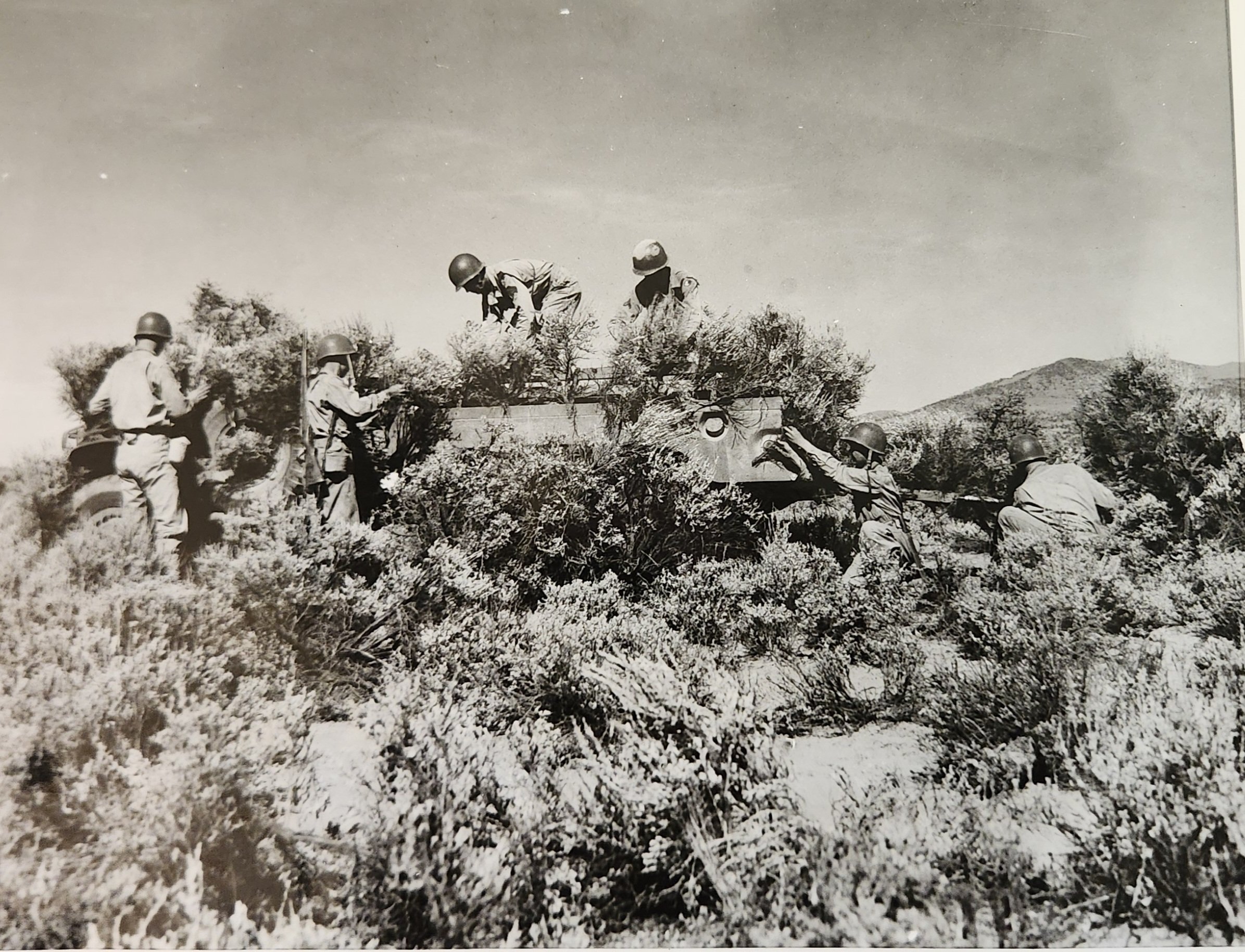
In the fall of 1943, much of central Oregon became a gigantic battlefield, but the bullets were not real, and the enemy was made up of fellow American soldiers.
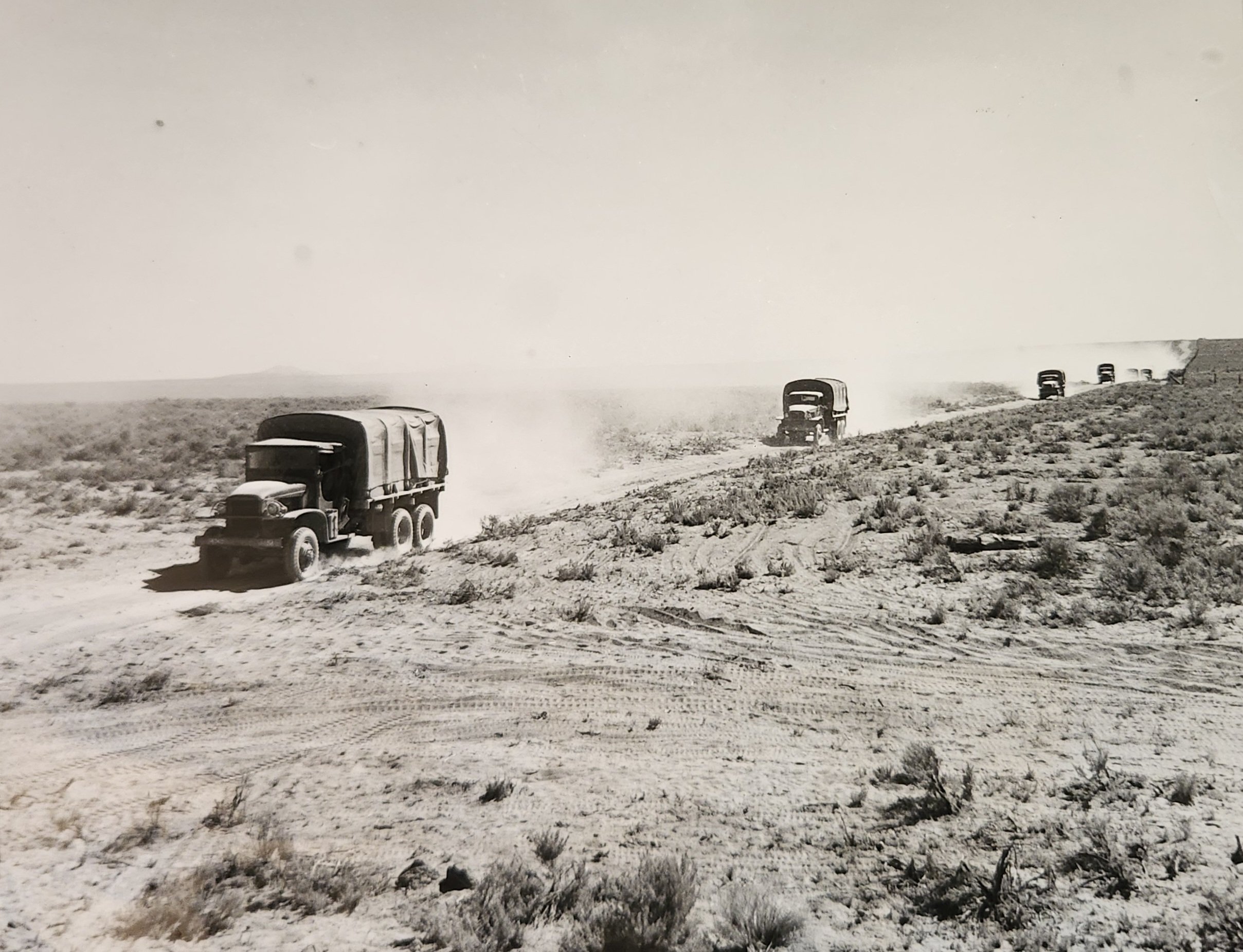
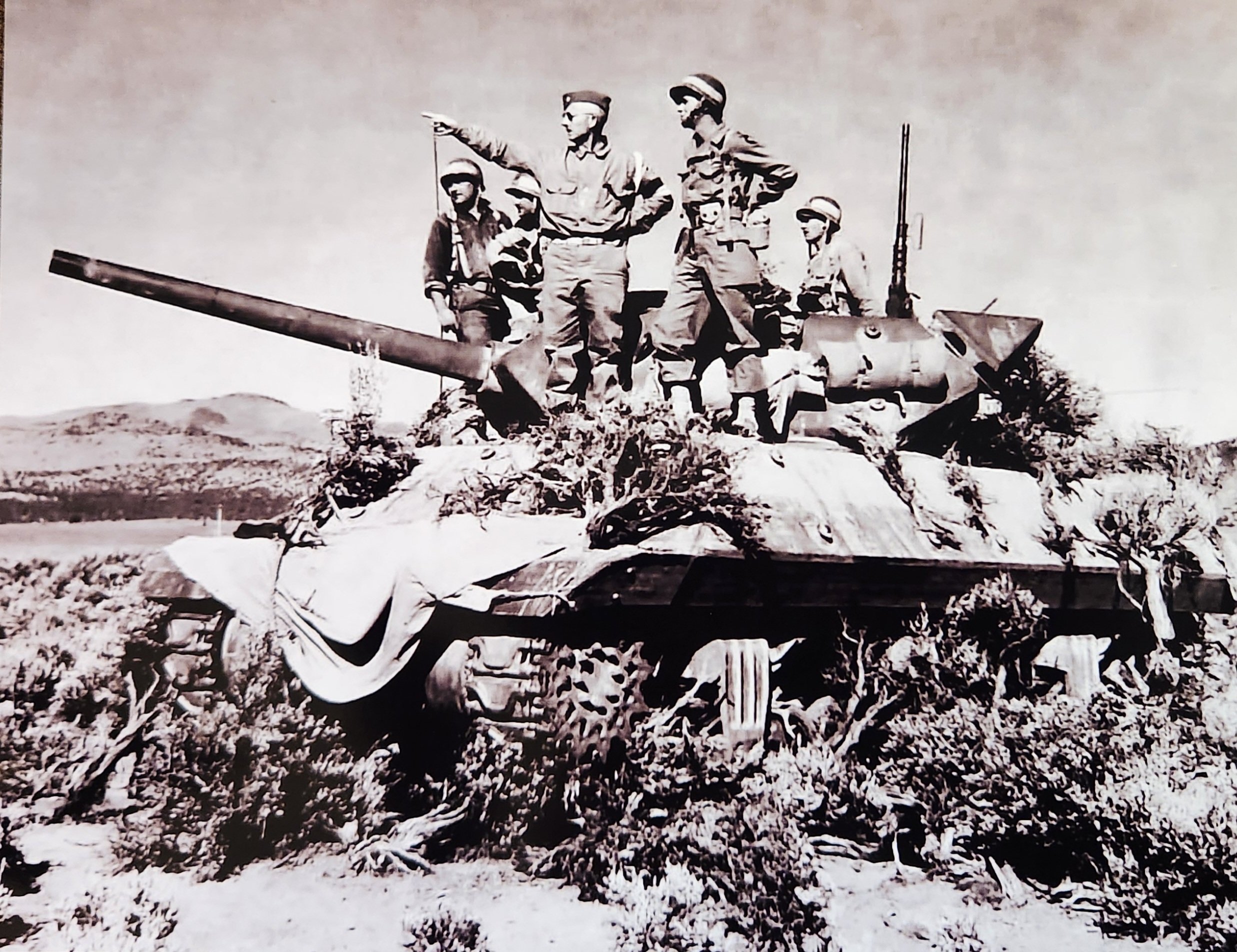
Known as the Oregon Maneuver, this massive military exercise was one of the largest training operations ever conducted in the Pacific Northwest. More than 75,000 Army personnel took part between September 13 and November 8, 1943. The exercise was designed to test whether entire divisions could operate together in conditions that more closely resembled actual combat. Infantry, artillery, engineers, communications, transportation, aircraft, and support units all had to work together across a huge area.
For Camp Adair, the maneuvers were particularly important. Camp Adair was not simply a place where soldiers lived. It was one of the major training centers that fed men, equipment, and experienced units into the Oregon Maneuver. The exercise also helped determine how ready Camp Adair's divisions were for the overseas fighting that lay ahead.
Camp Adair and the Oregon Maneuver
Camp Adair had been constructed rapidly in the Willamette Valley north of Corvallis beginning in 1942. The enormous cantonment eventually contained more than 1,400 structures and could accommodate roughly 40,000 people. Four infantry divisions would train there during World War II.
By 1943, Camp Adair was already a major Army training center.
Three of its divisions became central to the Oregon Maneuver:
96th Infantry Division — "Deadeyes"
104th Infantry Division — "Timberwolves"
91st Infantry Division — "Powder River"
The 70th Infantry Division "Trailblazers" was also activated at Camp Adair in June 1943 and became an important part of the camp's wartime story, although it was not one of the three infantry divisions that formed the opposing forces in the main Oregon Maneuver.
The maneuver was conducted under IV Army Corps, commanded by Major General Alexander M. Patch. The exercise was intended to train commanders and staffs to move and control entire divisions rather than simply train individual soldiers or regiments.
The 96th Infantry Division — The Deadeyes
The 96th Infantry Division was activated at Camp Adair on August 15, 1942, making it the first of the major divisions associated with the camp. Commanded by Major General James L. Bradley, the division spent months training in the Willamette Valley.
The division became particularly known for its emphasis on marksmanship. Brigadier General Claudius M. Easley, the assistant division commander, placed considerable emphasis on rifle training, helping give the division its nickname, the "Deadeyes."
In May 1943, the 96th left Camp Adair for Fort Lewis, Washington, but its training cycle eventually brought it back into the central Oregon maneuver area. During the Oregon Maneuver, the Deadeyes became the Red defensive force.
The division would ultimately go on to fight in the Pacific, including the campaigns in the Philippines and Okinawa.
The 104th Infantry Division — The Timberwolves
The 104th Infantry Division, better known as the Timberwolves, was activated at Camp Adair in September 1942.
The division trained extensively at Camp Adair before moving to the central Oregon maneuver area in August 1943.
During the Oregon Maneuver, the 104th was part of the Blue offensive force, along with the 91st Infantry Division. Their job was to attack the opposing Red force.
This was an important transition in training. Soldiers were no longer simply practicing marksmanship, marching, or small-unit tactics. Thousands of men had to move as a division across enormous distances while maintaining communications, supplies, transportation, artillery support, medical services, and command and control.
The Timberwolves would eventually leave the United States for Europe. In 1944–45 they fought through France, Belgium, and Germany, crossing the Roer and Rhine Rivers and eventually meeting Soviet forces at the Elbe River.
The 91st Infantry Division — The Powder River Division
The 91st Infantry Division, known as the Powder River Division, had been reactivated at Camp White near Medford in August 1942.
The division participated in the Oregon Maneuver after moving into central Oregon from Camp White. When the maneuver ended, the 91st moved north to Camp Adair in November 1943 for advanced training.
The 91st was essentially taking over the facilities and training environment that other divisions had occupied earlier in the war. Soldiers returning from the harsh central Oregon maneuvers came back to a permanent cantonment where they could conduct additional training before going overseas.
The 91st eventually departed Camp Adair in March 1944 and went on to fight in the Italian campaign.
How the Maneuver Worked
The Oregon Maneuver was not one gigantic battle. It consisted of eight major tactical problems, or simulated battles.
For each problem, two infantry divisions were designated as the Blue force, while the third became the Red force. Commanders were given starting positions and objectives, but they had to make their own decisions about how to accomplish their missions.
Approximately 1,500 umpires, wearing white armbands, followed the action.
They evaluated the performance of units and commanders and determined casualties when one force was considered to have been successfully engaged. Because live ammunition was not used, the umpires essentially decided what would have happened in an actual battle.
This made the exercise much more complicated than simply putting soldiers on a rifle range.
A division had to:
Move thousands of men and vehicles.
Establish communications.
Keep food and water moving.
Transport fuel.
Move ammunition.
Repair damaged vehicles.
Treat simulated casualties.
Coordinate artillery.
Conduct reconnaissance.
Establish headquarters.
Maintain supply lines.
Cross roads, rivers, and difficult terrain.
Respond to enemy movements.
Keep commanders informed.
Why Central Oregon Was Chosen
The central Oregon landscape provided something Camp Adair could not.
Camp Adair was located in the Willamette Valley, surrounded by farms, roads, forests, and relatively developed areas. Central Oregon offered vast stretches of open country where large formations could maneuver with considerably fewer civilian obstacles.
The maneuver area encompassed much of Deschutes County and portions of Lake, Harney, and Crook Counties. Camp Abbot, near present-day Sunriver, served as the IV Corps training headquarters.
Troops lived in temporary field camps rather than the comfortable permanent-style environment of Camp Adair.
They experienced dust, long road marches, vehicle problems, primitive field conditions, and the difficulty of keeping a large army supplied far away from its permanent cantonment.
The Effect on Camp Adair
The Oregon Maneuver changed Camp Adair in several ways. Camp Adair became part of a regional training network. Camp Adair was no longer an isolated training camp. It became connected to Camp White, Camp Abbot, the central Oregon maneuver area, Redmond Army Air Field, railroads, highways, and other military installations throughout Oregon.
Camp Adair had to support tens of thousands of men. When divisions went into the field, Camp Adair's support system did not simply shut down.
The camp's mess halls, warehouses, motor pools, hospitals, PXs, post offices, communications facilities, service clubs, theaters, transportation systems, and administrative offices all supported the training effort.
The maneuver demonstrated that a modern army required far more than riflemen. Soldiers experienced a transition from garrison life to field warfare.
At Camp Adair, soldiers slept in barracks, ate in mess halls, used showers and latrines, visited the PX, attended movies, trained on ranges, and performed their daily military duties. Then they went into central Oregon and had to live and operate in the field.
That contrast was deliberate. The Army wanted soldiers to understand that combat would not take place in the comfortable environment of a permanent cantonment.
A Camp Adair Story Within the Oregon Maneuver
The Oregon Maneuver is sometimes remembered primarily as a central Oregon event, but Camp Adair was an important part of the story.
The soldiers did not suddenly appear in the desert near Bend.
Many of them had spent months living in the barracks at Camp Adair. They had eaten in its mess halls, trained on its ranges, attended classes, maintained their equipment, visited the PX and service clubs, and learned how to function as soldiers.
Then they packed their equipment and headed east.
For the men of the 96th and 104th, the maneuver was a major step in their progression toward combat. For the 91st, the maneuver was followed by its move to Camp Adair for advanced training.
The camp therefore served both as a starting point and a stopping point in the cycle.
That is one of the most interesting aspects of Camp Adair's history: its story cannot be separated from the larger military training network that existed across Oregon during World War II.
The Legacy of the Oregon Maneuver
The Oregon Maneuver lasted only from September to November 1943, but its significance extended far beyond those two months.
It demonstrated the enormous logistical challenges of moving an American infantry corps across hundreds of square miles of terrain. It tested commanders, communications systems, transportation, artillery coordination, supply organizations, engineers, medical units, and ordinary soldiers.
Most importantly, it gave American commanders an opportunity to discover weaknesses before those weaknesses had to be confronted on a real battlefield.
For Camp Adair, the maneuver was another chapter in the transformation of a quiet Willamette Valley landscape into one of Oregon's largest wartime military centers.
Between 1942 and 1944, Camp Adair became a place where entire divisions were activated, trained, reorganized, sent into the field, replaced by other divisions, and ultimately sent overseas.
The Oregon Maneuver was an important part of that process.
Camp Adair trained the soldiers. Central Oregon tested them. The battlefields of Europe and the Pacific would ultimately determine how well that training worked.