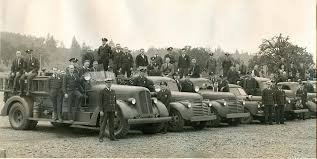
During World War II, Camp Adair, north of Corvallis, Oregon, was a military community so large that it needed many of the same public services found in a city. Among these was a dedicated fire department, organized to protect the soldiers, civilian employees, and thousands of wooden buildings spread throughout the military reservation.
Five fire stations served Camp Adair, one fire station served the station hospital, providing coverage across the sprawling cantonment. Their work was particularly important because the camp contained hundreds of wooden barracks, mess halls, warehouses, theaters, administrative buildings, and other structures built rapidly in 1942 to support the Army's wartime training mission.
The Camp Adair Sentry, the camp's wartime newspaper, reported on the fire department's work and its personnel. A June 10, 1943, issue described the department as having been established about a year earlier and praised Chief A. L. Sherk and his assistants for developing an organized fire service.
The department was not simply a collection of fire engines waiting for emergencies. Firefighters had to remain ready for calls throughout the day and night, and the four stations helped make that readiness possible across the camp. The department's responsibilities extended beyond putting out fires. It needed to be prepared for emergencies in a community containing thousands of people and a large concentration of buildings.
Rapid response: Stations distributed around the cantonment helped firefighters reach emergencies throughout the installation.
Emergency communications: Camp Adair used emergency telephones placed on streetlight poles. The poles were painted with red and white stripes so soldiers could identify them.
Fire and air-raid alarms: The July 8, 1943, Camp Adair Sentry described a warning system using six centrally controlled fire-station sirens and the laundry whistle.
Coordination across the post: Soldiers and other personnel were instructed how to respond to alarms, including reporting to designated assembly areas or duty stations.
Chief A. L. Sherk was one of the department's prominent figures. The February 25, 1943, Camp Adair Sentry identified him as fire chief and reported on his involvement in camp activities. By June 1943, the newspaper was praising the department's organization and the work of Sherk and his assistants.
The firefighters' readiness mattered because a fire in one wooden building could threaten nearby structures. Barracks, kitchens, warehouses, and other facilities were essential to keeping the camp operating. Fire protection was therefore an important part of the Army's broader system of maintaining the installation and supporting its training mission.
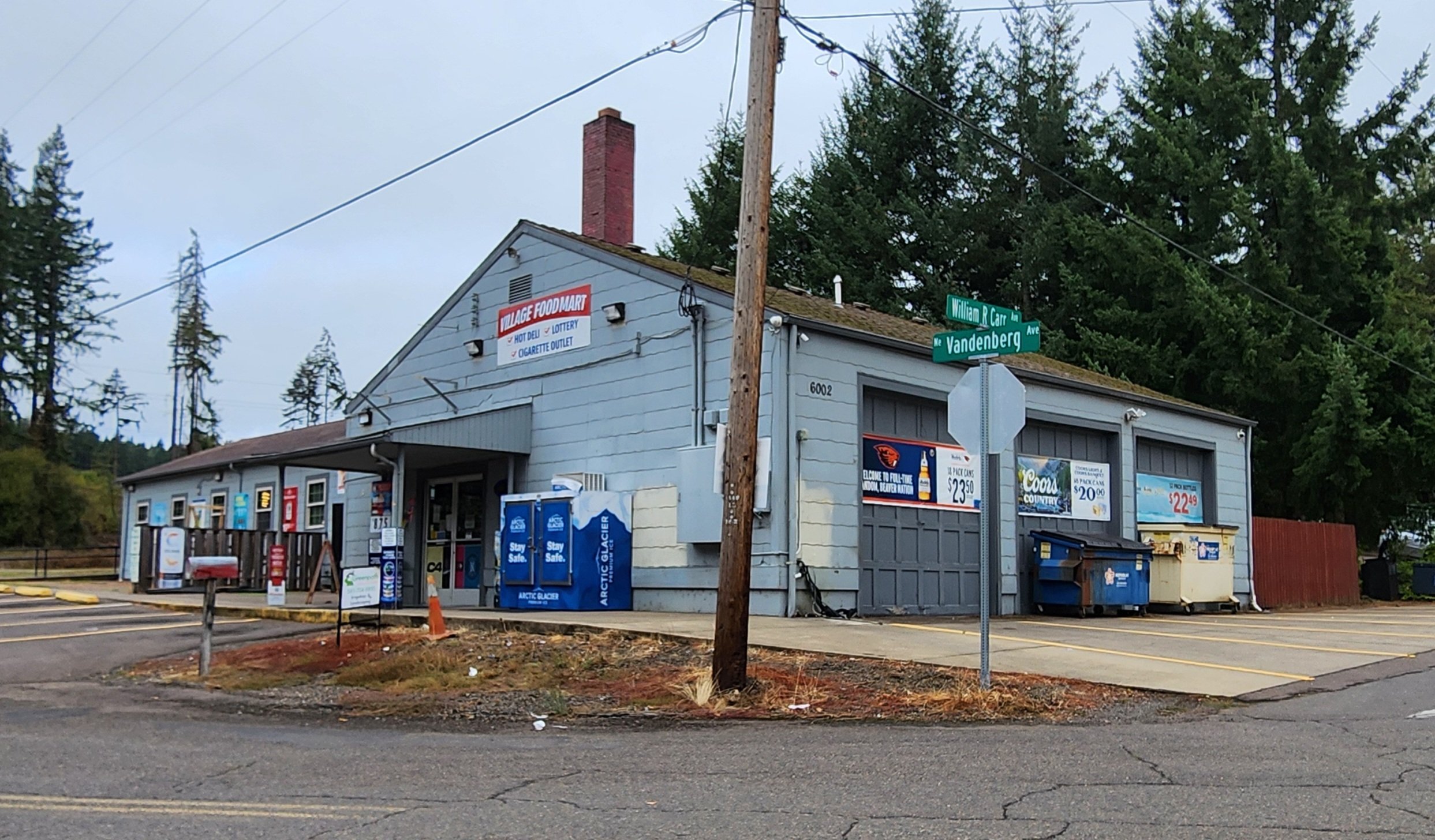
Camp Adair's wartime buildings were largely dismantled, sold, or transferred after the Army's training operations ended. However, at least one building associated with the camp's fire service survived: a former fire station now used as the Market in Adair Village.