
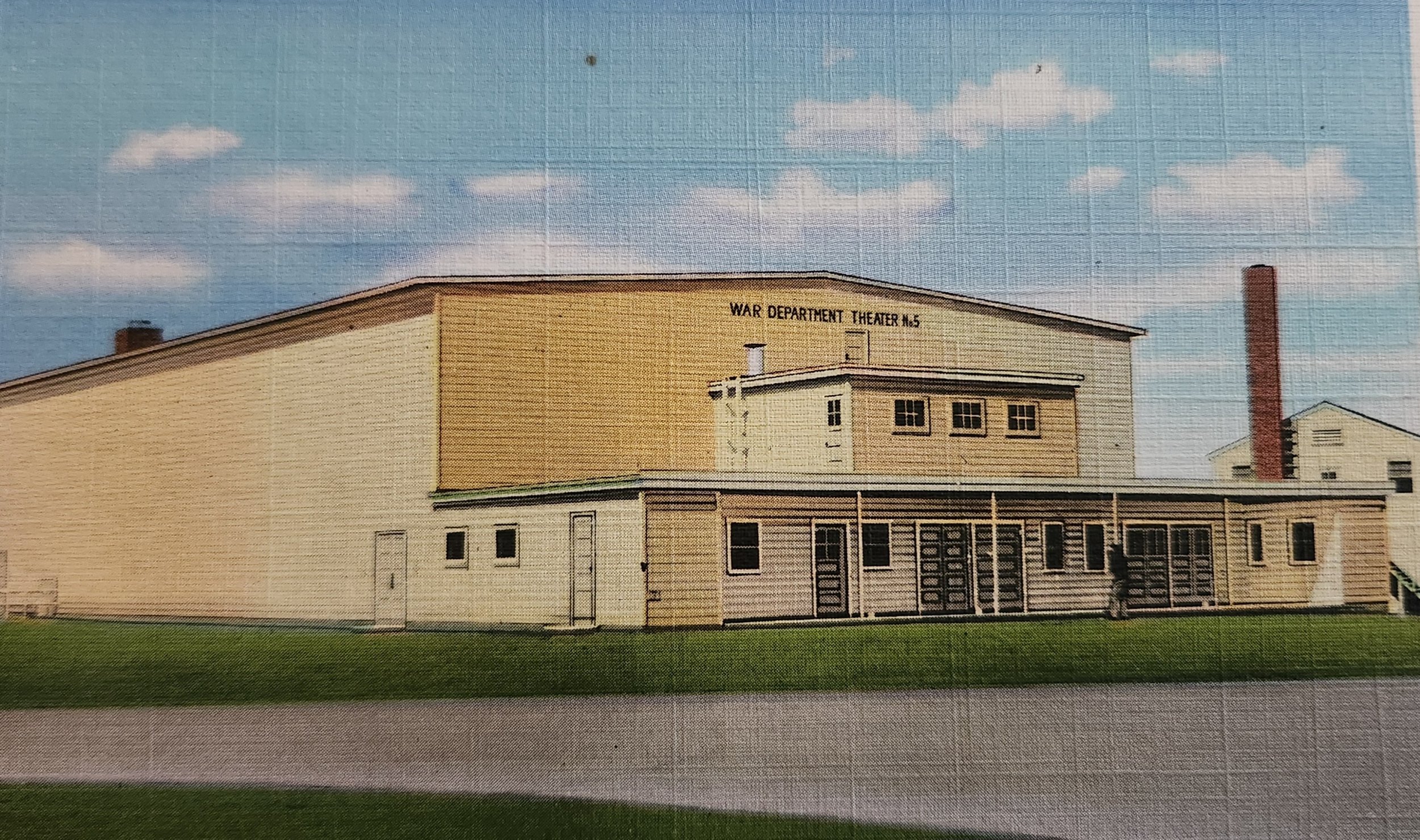
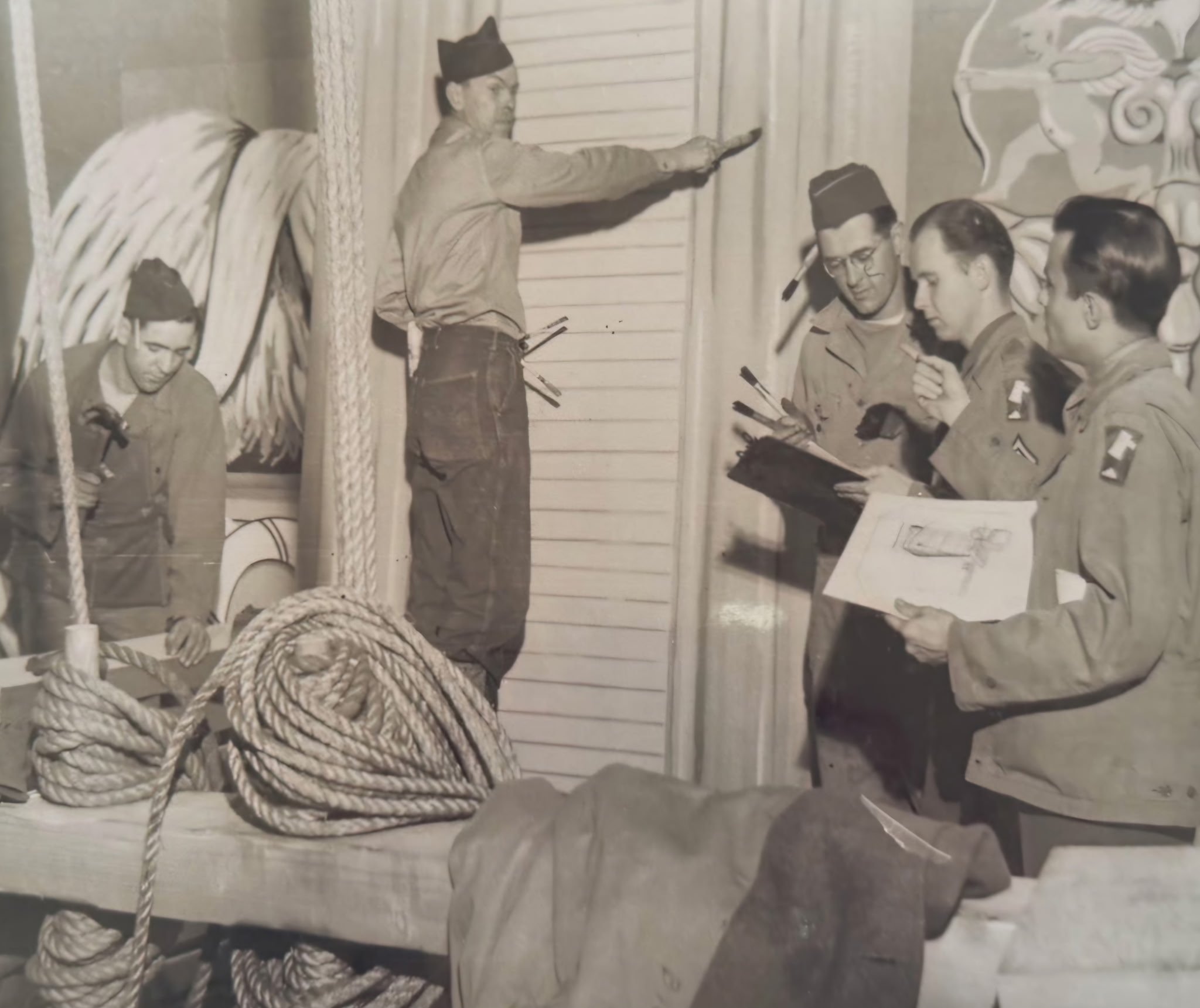
Service men practice back stage at the Theater.
Camp Adair featured five theaters designed in the style of traditional movie houses, complete with sloped seating, a projection room, and a full stage with an under-stage area used for performances. The larger theaters could accommodate approximately 1,000 soldiers, while the smaller Theater No. 4 seated around 600.
These theaters were a central part of camp life, offering entertainment seven nights a week. Soldiers could attend two evening showings each night, and Sunday matinees were also regularly scheduled. In addition to motion pictures, the theaters frequently hosted live performances, including traveling USO shows.
Beyond entertainment, the theaters also served an important role in the war effort by showing educational and training films. These films were used to instruct soldiers on a wide range of topics, from technical skills to military procedures, making the theaters a key part of both morale and military readiness.
Movies shown at Camp Adair were typically available about three months after their initial release, giving servicemen access to relatively current films despite wartime conditions. Early in the camp’s operation, admission was set at 15 cents. However, in June 1943, a directive was issued making all movie screenings free for servicemen, ensuring that entertainment remained accessible to all.