
The stockade was a secured compound surrounded by a barbed-wire fence, with guard towers providing security and observation over the enclosure. Inside the wire were four barracks buildings used to house the men who were detained. The stockade also had its own special mess hall, which was larger than the standard mess halls found throughout Camp Adair. A separate latrine facility provided sanitary facilities for the prisoners.
The arrangement of the stockade was different from an ordinary Camp Adair barracks area. The buildings inside the wire were specifically associated with confinement and the care of detained personnel. The fencing, guard towers, controlled entrances, and military police presence made the area a highly restricted part of the post.
Outside the stockade's barbed-wire enclosure was another group of buildings supporting its operation. Three barracks buildings were provided for the military police, giving the guards a nearby place to live and operate from while they were responsible for the security of the prisoners. There were also two storehouse buildings outside the wire, providing additional storage and support for the stockade operation.
The entire arrangement created a small, self-contained military-security complex within Camp Adair. The prisoners lived inside the secured area, while the MPs who guarded them had their own quarters immediately outside the enclosure. The separate mess hall, latrine, guard towers, fencing, and storage buildings allowed the stockade to function independently while remaining connected to the larger Camp Adair military community.
Prisoners of War at Camp Adair
As World War II progressed, Camp Adair was also connected with the Army's prisoner-of-war program. German prisoners captured overseas were transported to the United States and held at military and other authorized POW facilities. Some prisoners were assigned supervised work details, providing labor for military installations and other wartime operations.
At a massive installation such as Camp Adair, there was an enormous amount of work to be done. Roads, warehouses, grounds, maintenance operations, supply activities, and other functions required large amounts of labor. The presence of prisoners added another unusual chapter to the history of the camp.
For the soldiers serving as military police, guarding prisoners was a serious responsibility. The MPs had to maintain security, control movement, prevent escapes, and maintain order within the stockade. Their duties were in addition to the many other responsibilities performed by Camp Adair's military police throughout the reservation.
The stockade therefore represented an important but often overlooked part of Camp Adair's wartime infrastructure. While thousands of soldiers trained for combat on the surrounding maneuver grounds, another group of soldiers was responsible for guarding those who had been detained or captured.
A Forgotten Part of Camp Adair
Today, the stockade is one of the lesser-known pieces of Camp Adair's physical history. Many of the original buildings have disappeared, but understanding the layout helps reveal how extensive the wartime installation really was.
The four prisoner barracks, larger special mess hall, latrine, guard towers, and barbed-wire enclosure formed the heart of the stockade. Outside the wire, the three MP barracks and two storehouses supported the men responsible for guarding and operating the facility.
These buildings tell an important story about Camp Adair beyond its famous infantry divisions and combat training. Camp Adair had to function as an entire military city, and that meant providing facilities not only for training and living, but also for military police, detention, security, and prisoners.
The stockade and prisoner-of-war facilities were therefore another piece of the enormous World War II landscape that once occupied the Willamette Valley a part of Camp Adair that deserves to be remembered alongside its barracks, hospitals, warehouses, theaters, training areas, and other wartime buildings. If you want, I can also expand this into a more detailed historical article describing the stockade's layout building-by-building, including what the MPs and prisoners would have experienced there.
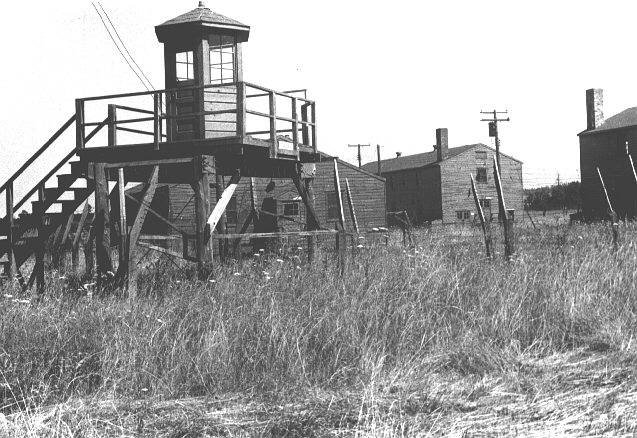
Photo of the guard tower, the mess hall directly behind
and the barrack shown too.
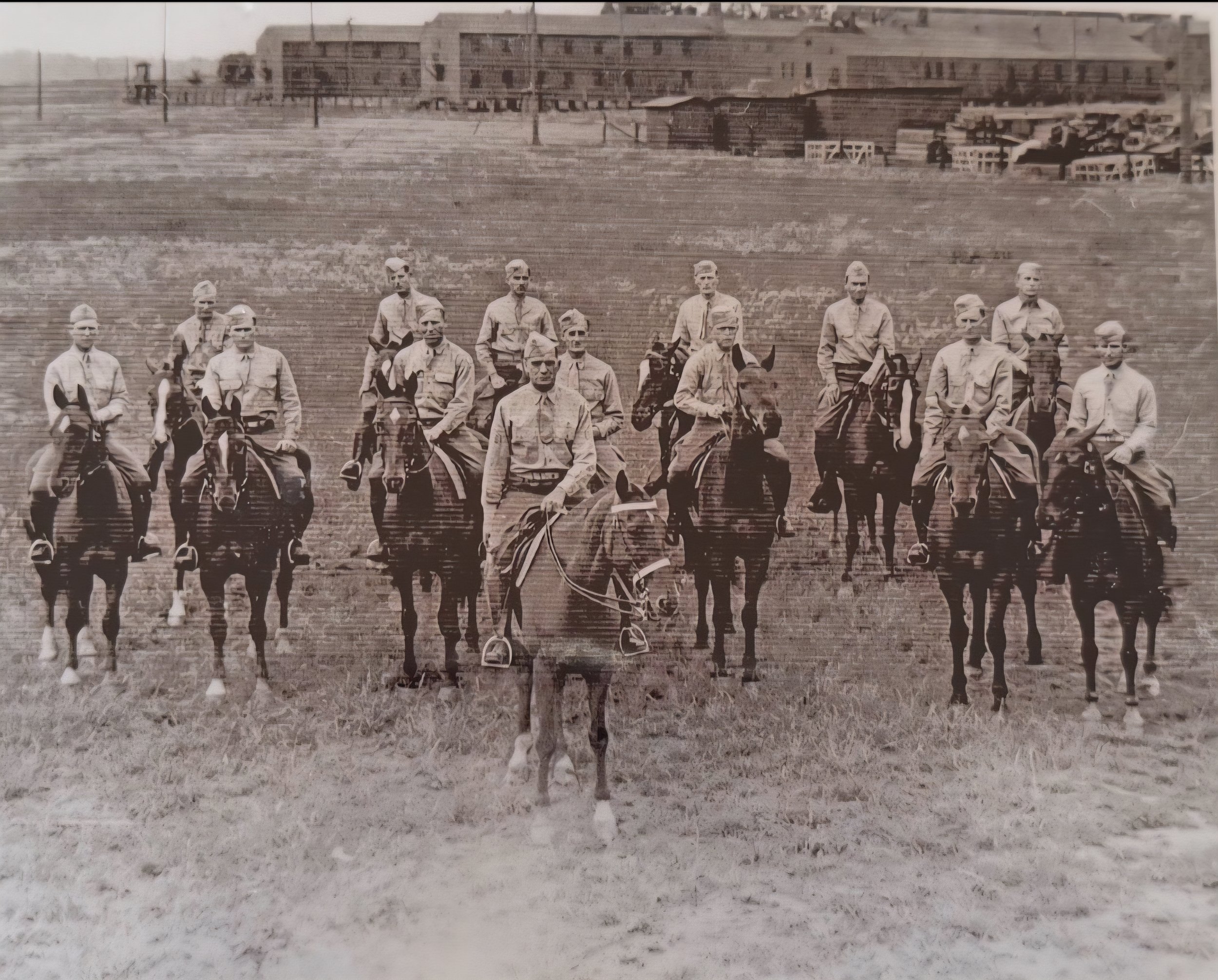
The buildings in the background is the Stockade.