Gas and Chemical Warfare Training at Camp Adair
When American soldiers arrived at Camp Adair during World War II, they were being prepared for a war unlike anything the United States had experienced before. One of the threats that remained in the minds of military planners was chemical warfare.
The horrors of poison gas during World War I were still within living memory. American soldiers had experienced chemical attacks during that conflict, and the Army understood that a future enemy could once again use chemical weapons against American troops.
Germany had been one of the major users of chemical weapons during World War I, employing agents such as chlorine, phosgene, and mustard gas. Although Germany did not use chemical weapons against Allied troops on the European battlefield during World War II, American soldiers could not assume that this would remain the case. The possibility of a gas attack was taken seriously, and soldiers were trained to react immediately if the alarm was given.
At Camp Adair, chemical-warfare training became another part of the soldier's preparation for combat.
Learning to Survive a Gas Attack
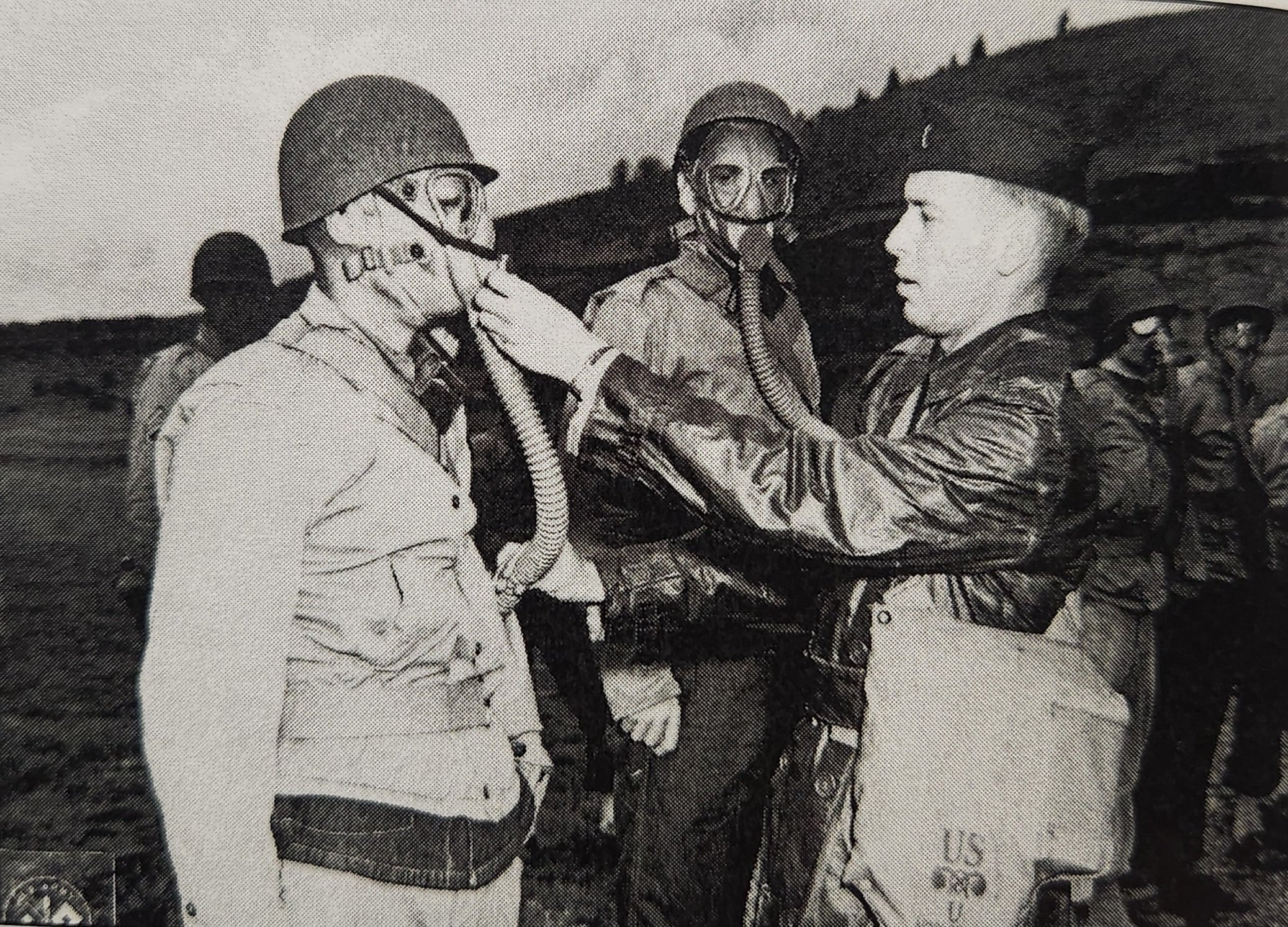
For the ordinary soldier, one of the most important pieces of chemical-warfare equipment was his gas mask. Soldiers had to learn how to carry it, maintain it, put it on quickly, and use it correctly under stressful conditions.
This was not simply a classroom exercise.
Gas-mask drills were incorporated into military training at Camp Adair. Soldiers practiced putting on their masks and operating while wearing them. They had to become accustomed to the restricted vision, breathing resistance, heat, and discomfort that came with wearing the mask.
The objective was simple: if a chemical alarm sounded in combat, a soldier could not afford to hesitate.
The Camp Adair Sentry reported that the post's Chemical Warfare Office conducted regular courses in gas-mask and gas-chamber drill, gas identification, and other chemical-warfare subjects. The Chemical Warfare personnel also trained other members of the military and even assisted with gas-defense instruction for civilian air-raid wardens in surrounding communities.
Training for Mustard Gas
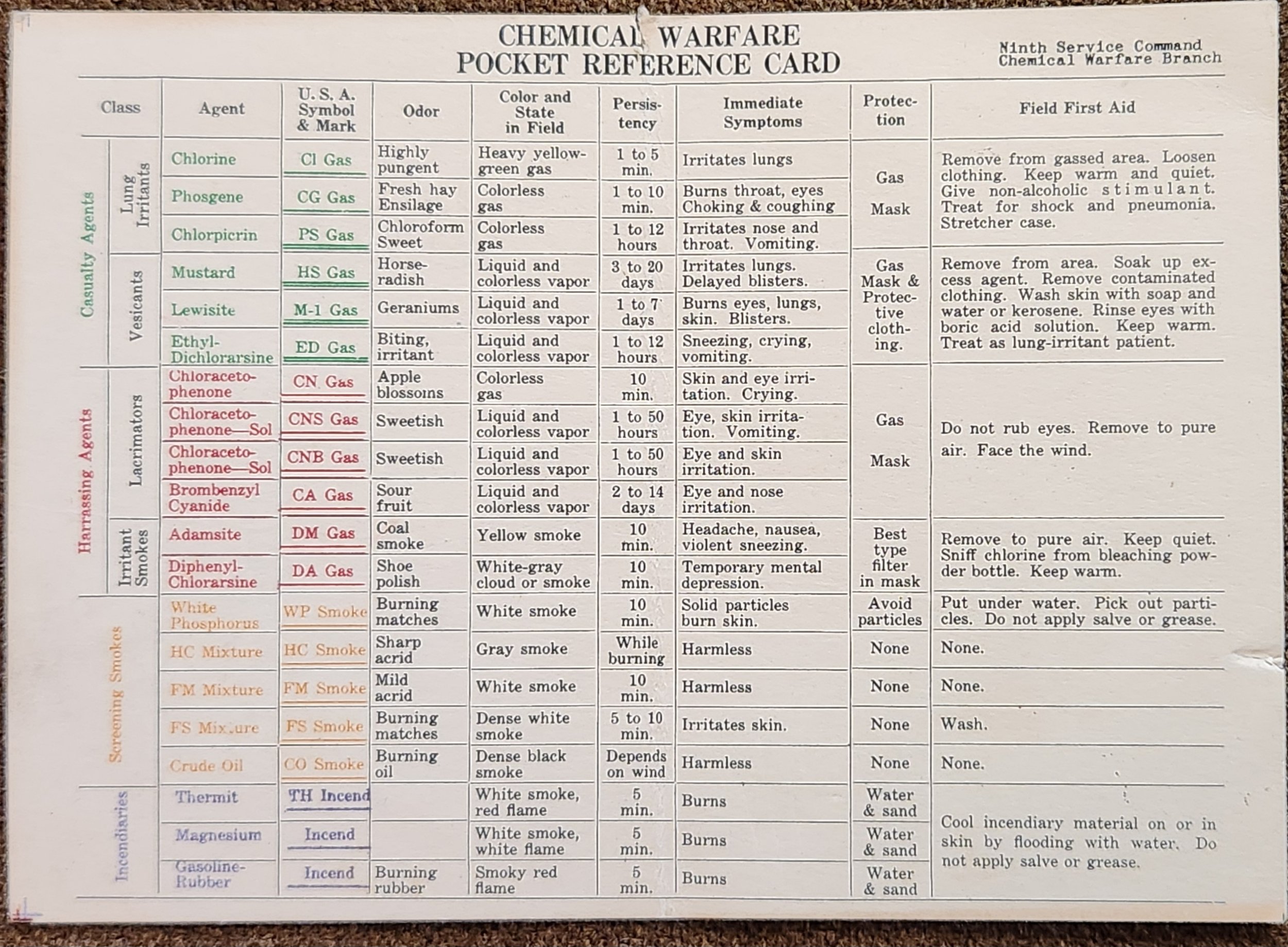
Mustard gas was particularly feared because it was different from gases that primarily attacked the lungs. Mustard was a blistering agent that could cause severe injuries to the skin, eyes, and respiratory system.
A gas mask could protect a soldier's eyes and lungs, but it did not provide complete protection against mustard gas contacting exposed skin. Consequently, chemical-warfare training involved more than simply learning to put on a mask.
Soldiers were taught how to recognize chemical hazards, protect themselves, and deal with contaminated equipment and terrain.
One remarkable photograph published in the Camp Adair Sentry in August 1943 shows the seriousness of this training. The photograph's caption describes a Chemical Warfare Service decontamination squad working around a mustard-gas shell hole. The men are shown wearing complete protective clothing while practicing the procedures necessary to deal with a contaminated area. They are also shown using dirt and chloride of lime and marking the contaminated area.
This type of training was designed to make chemical warfare something soldiers could respond to through practiced procedures rather than panic.
The Gas Chamber
One of the most memorable, and probably unpleasant parts of chemical-warfare training was the gas chamber.
The purpose was to demonstrate to soldiers what chemical exposure could mean and to give them confidence in their protective equipment. Soldiers needed to know that their masks worked and, just as importantly, they needed to know how quickly they had to put them on when ordered.
Gas-chamber exercises were part of the prescribed chemical-warfare training at Camp Adair. The post's Chemical Warfare Office included gas-chamber drills among its regular instruction.
For a young soldier who had never experienced chemical warfare, entering a gas chamber was an entirely different experience from hearing a lecture about poison gas. It made the training real.
Training the Chemical-Warfare Specialists
Chemical-warfare training at Camp Adair extended beyond the individual rifleman.
The Army required units to have specially trained gas officers and gas noncommissioned officers who were responsible for chemical-defense matters within their organizations.
This continued at Camp Adair throughout the training period. For example, a December 1943 training memorandum from the 70th Infantry Division announced a Division Chemical Warfare School to be held in January and February 1944. The school was specifically designed to maintain qualified gas officers and noncommissioned officers throughout the division.
The curriculum included:
- Protection and first aid
- Chemical agents
- Chemical intelligence
- Weather
- Chemical-warfare tactics
- Supply
- Training methods
- Personnel responsibilities
The students were required to bring their gas masks and field manual FM 21-40, Defense Against Chemical Attack. Each infantry battalion was required to send an officer and noncommissioned officer, while companies and artillery batteries sent additional noncommissioned personnel.
This demonstrates that chemical defense was not an occasional demonstration at Camp Adair. It was incorporated into the Army's formal training system.
Preparing Soldiers
Chemical warfare was also considered a threat to the communities surrounding Camp Adair.
The Camp Adair Chemical Warfare Office conducted gas-defense schools for civilian air-raid wardens in nearby towns and cities. The Army understood that chemical warfare could potentially affect civilians as well as soldiers, particularly if enemy aircraft attacked American cities or military installations.
Camp Adair was therefore part of a much larger national effort to prepare the United States for the possibility of chemical attack.
Why Was This Training Necessary?
By the time Camp Adair opened in 1942, World War I was only about twenty-four years in the past.
Many Americans serving in the Army had fathers, uncles, brothers, or friends who had served in the First World War. The images and stories of men blinded, burned, or killed by chemical weapons were still fresh.
The Army could not know whether Germany would use chemical weapons again.
Because of that uncertainty, American soldiers were trained as though a gas attack could happen at any time.
At Camp Adair, a soldier's training could include rifle and machine-gun fire, artillery, mortar and tank exercises, night maneuvers, marches, and eventually the possibility of facing chemical contamination. Camp Adair was designed to prepare soldiers for the realities of modern warfare, and chemical defense was one part of that preparation. The Army's broader training mission at Camp Adair included intensive preparation for combat with infantry, artillery, armor, aircraft, and other weapons.
A Threat That Never Came
Ironically, the extensive preparation for chemical warfare ultimately became preparation for a weapon that the American soldier did not have to face on the European battlefield.
Germany possessed chemical weapons, but Hitler's Germany did not launch the expected large-scale chemical attacks against American or Allied ground forces in Europe.
That did not make the training at Camp Adair unnecessary.
The Army's philosophy was that a soldier had to be prepared for the worst-case scenario. If chemical weapons had been used, soldiers who had practiced with their masks, learned contamination procedures, and understood chemical hazards would have had a better chance of surviving.
For the men training at Camp Adair, gasmask drills may have seemed like just another unpleasant part of Army life. Looking back, however, these exercises reveal how seriously the United States prepared for the possibility of chemical warfare.
The gas mask hanging from a soldier's shoulder was more than another piece of equipment. It represented the memory of World War I, and the fear that the terrible weapon of that war might return.
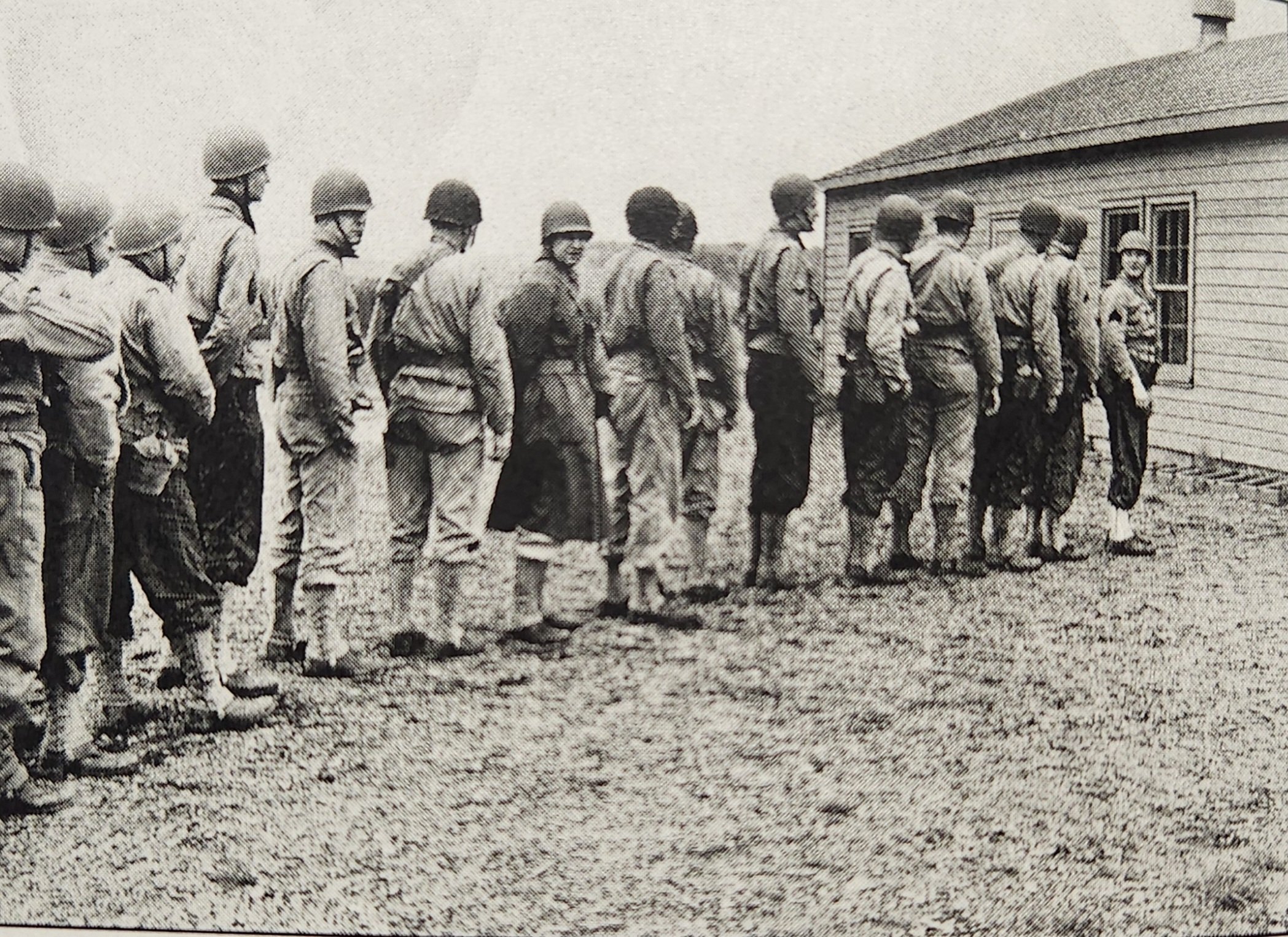
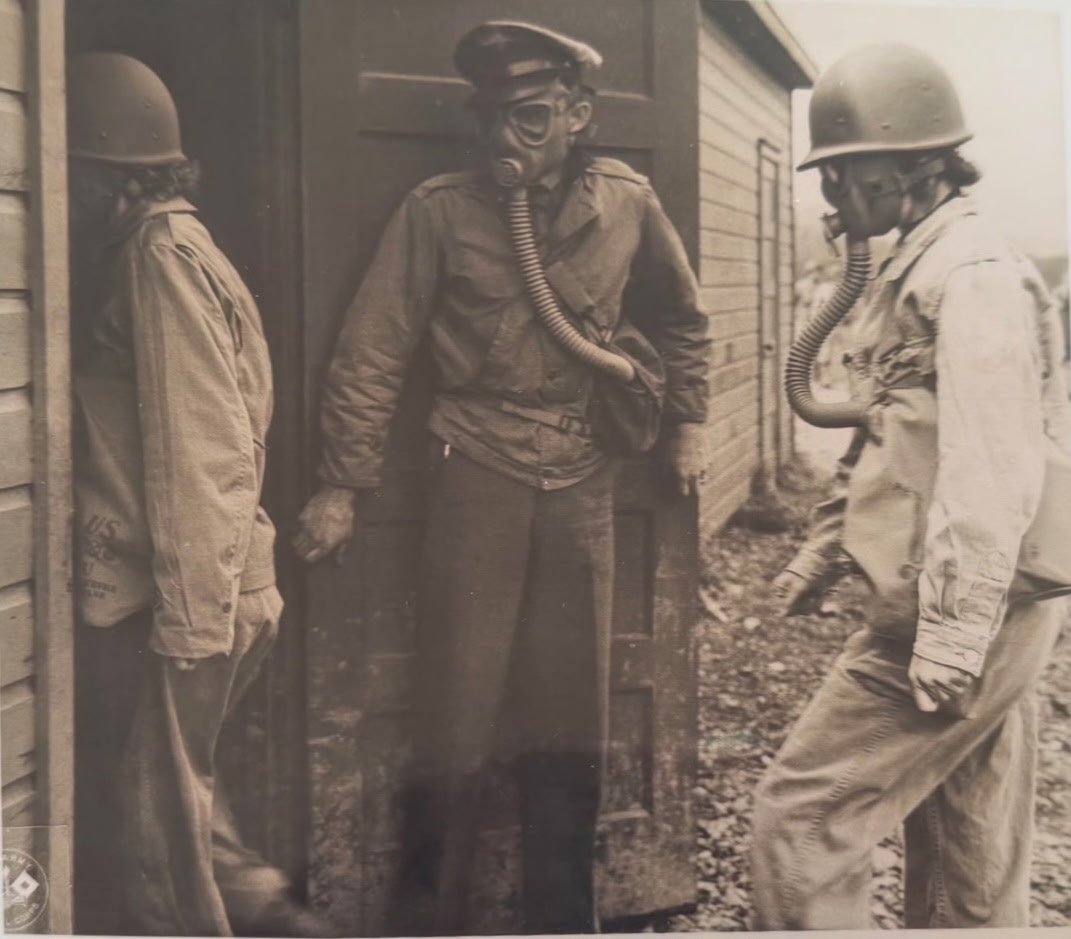
This photo of the men entering the Gas Chamber was in 1942
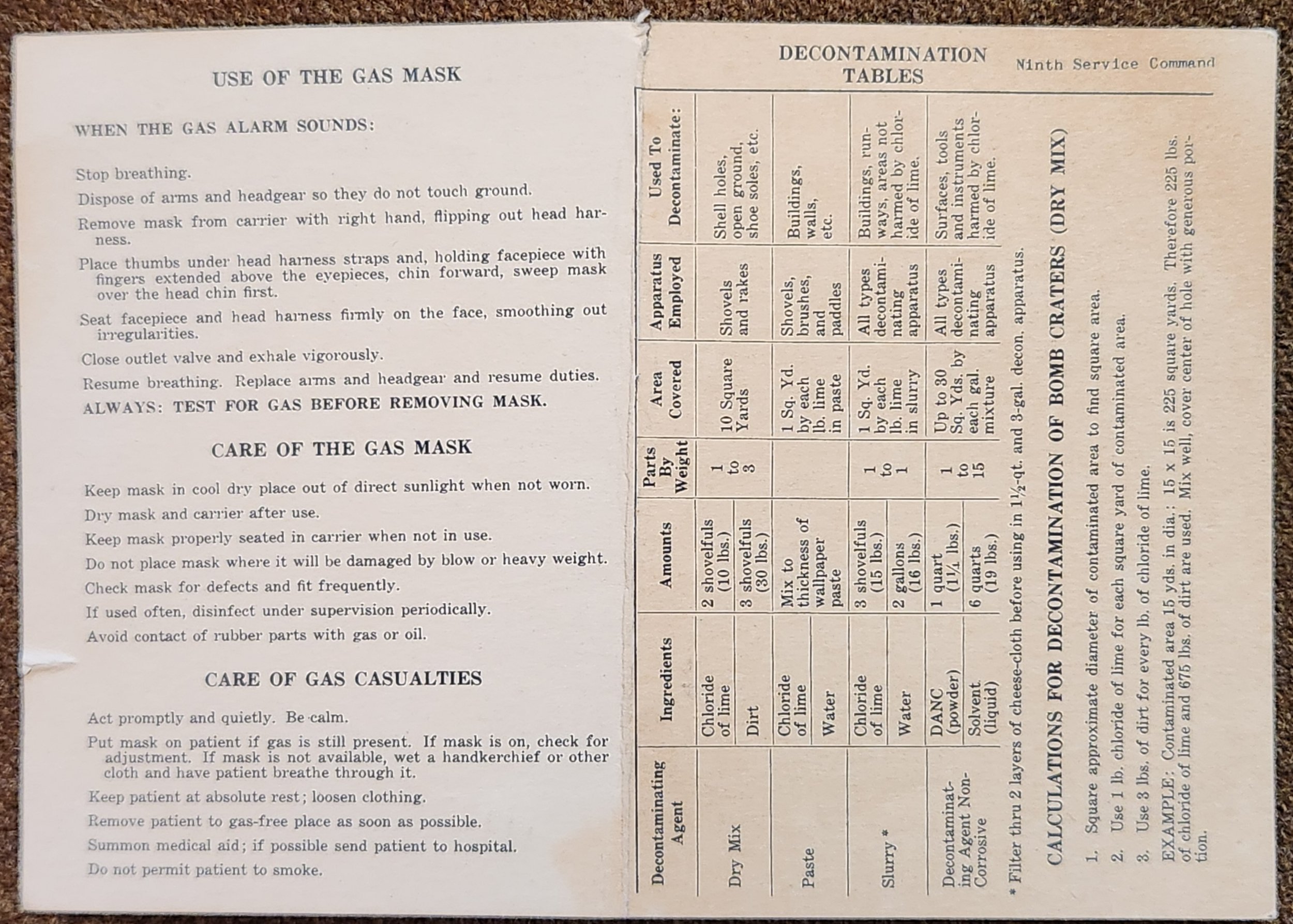
This Chemical Warfare Card was done by the 9th Service Command