Training to Disarm German Mines
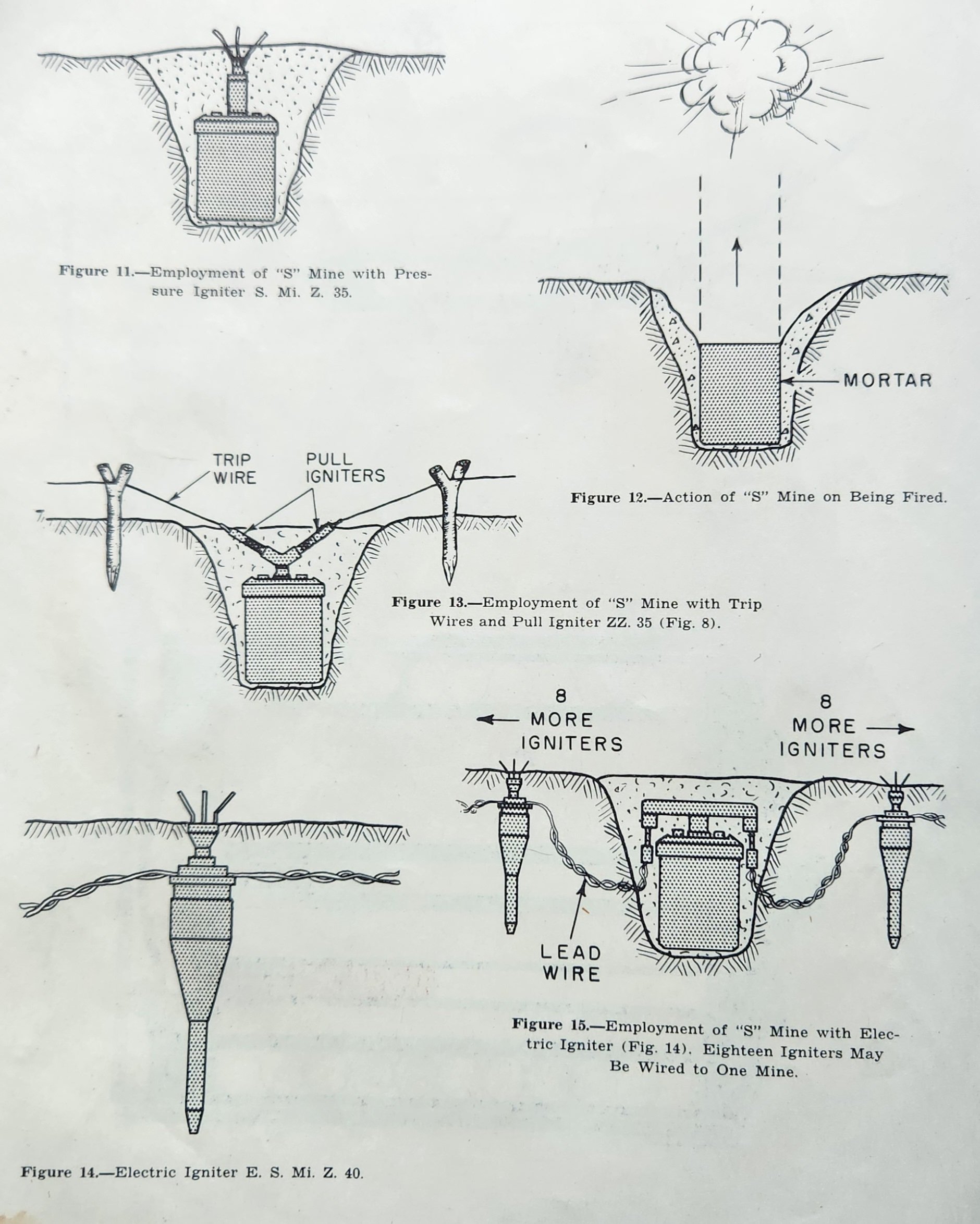
During World War II, American soldiers were trained to recognize and deal with the dangers of enemy mines and other battlefield explosives. German forces used mines extensively to slow advancing Allied troops, protect defensive positions, and make roads, fields, and approaches dangerous for infantry and vehicles.
At Camp Adair, soldiers preparing for overseas service would have received instruction in mine warfare as part of their combat training. They learned that a mine was not simply an explosive buried in the ground it was a carefully designed weapon intended to remain hidden and dangerous long after it had been placed.
Training emphasized recognition, caution, and proper procedures. Soldiers were taught to identify areas where mines might have been placed, recognize disturbed soil and other warning signs, and understand that mines could be concealed along roads, trails, bridges, defensive positions, and likely avenues of advance.
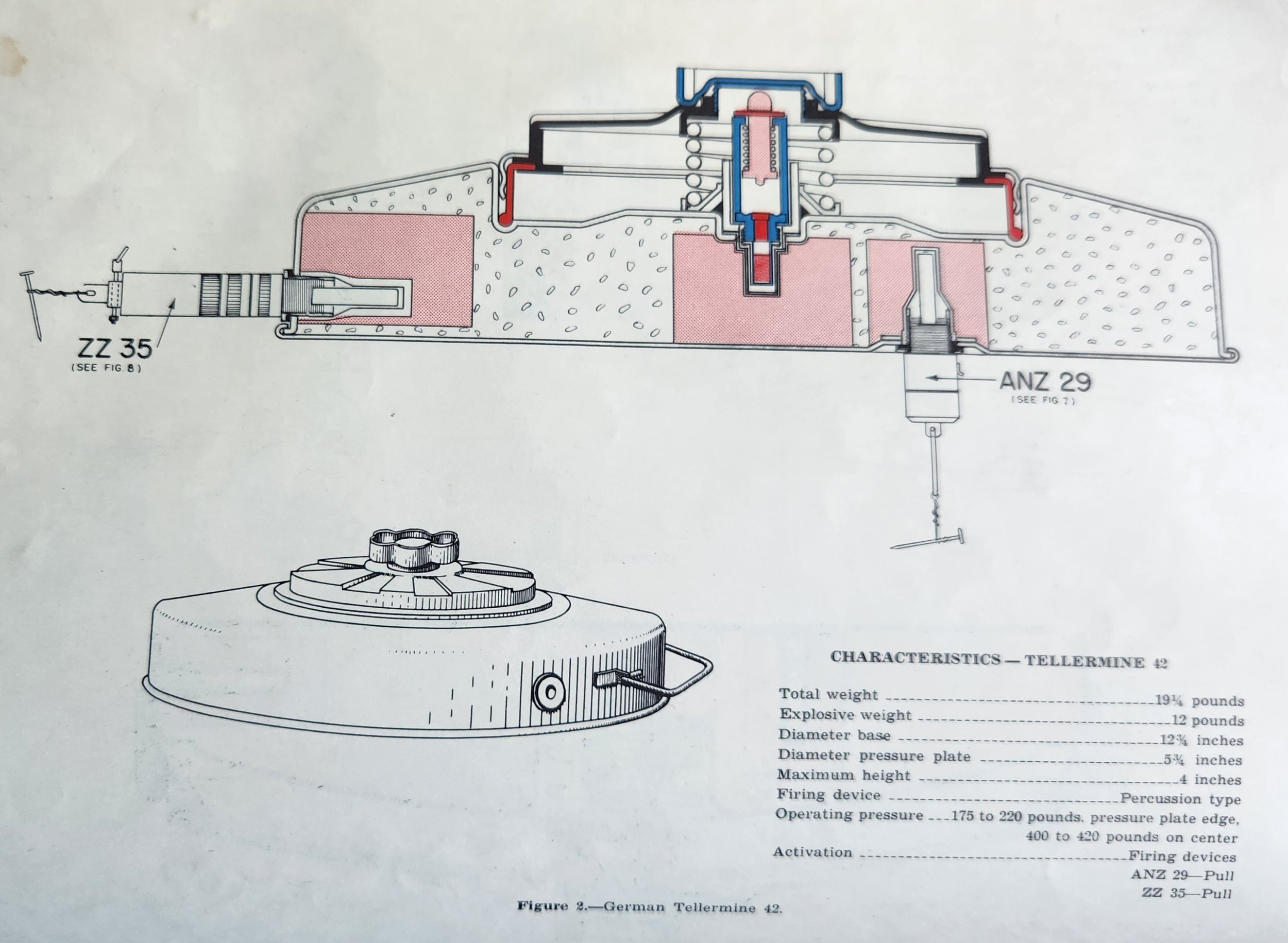
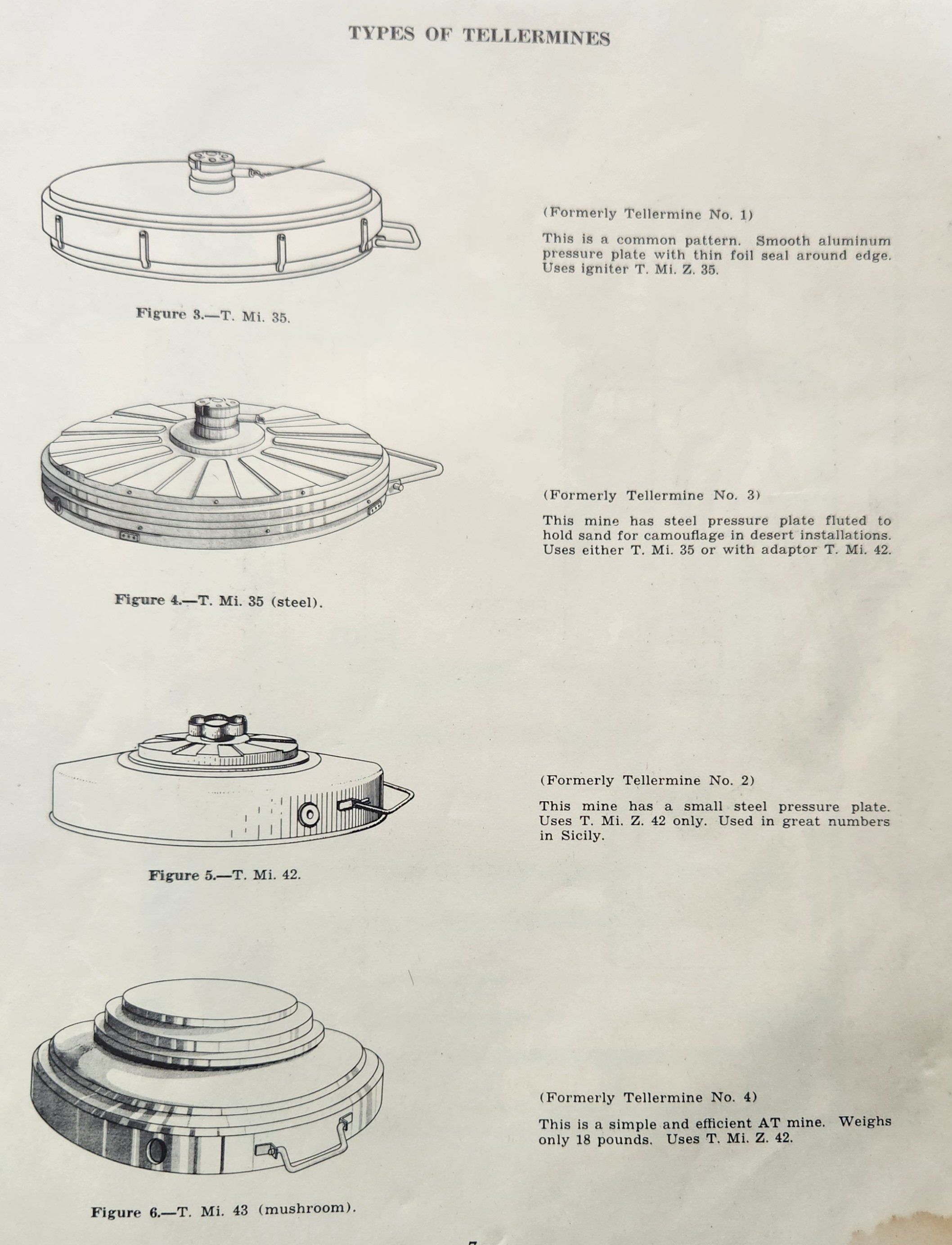
Specialized engineer personnel received more advanced instruction in locating, marking, and clearing minefields. Infantrymen, meanwhile, needed to know how to recognize suspected minefields and avoid disturbing mines unnecessarily. Training also introduced soldiers to the appearance and characteristics of foreign mines so they could better recognize enemy equipment encountered overseas.
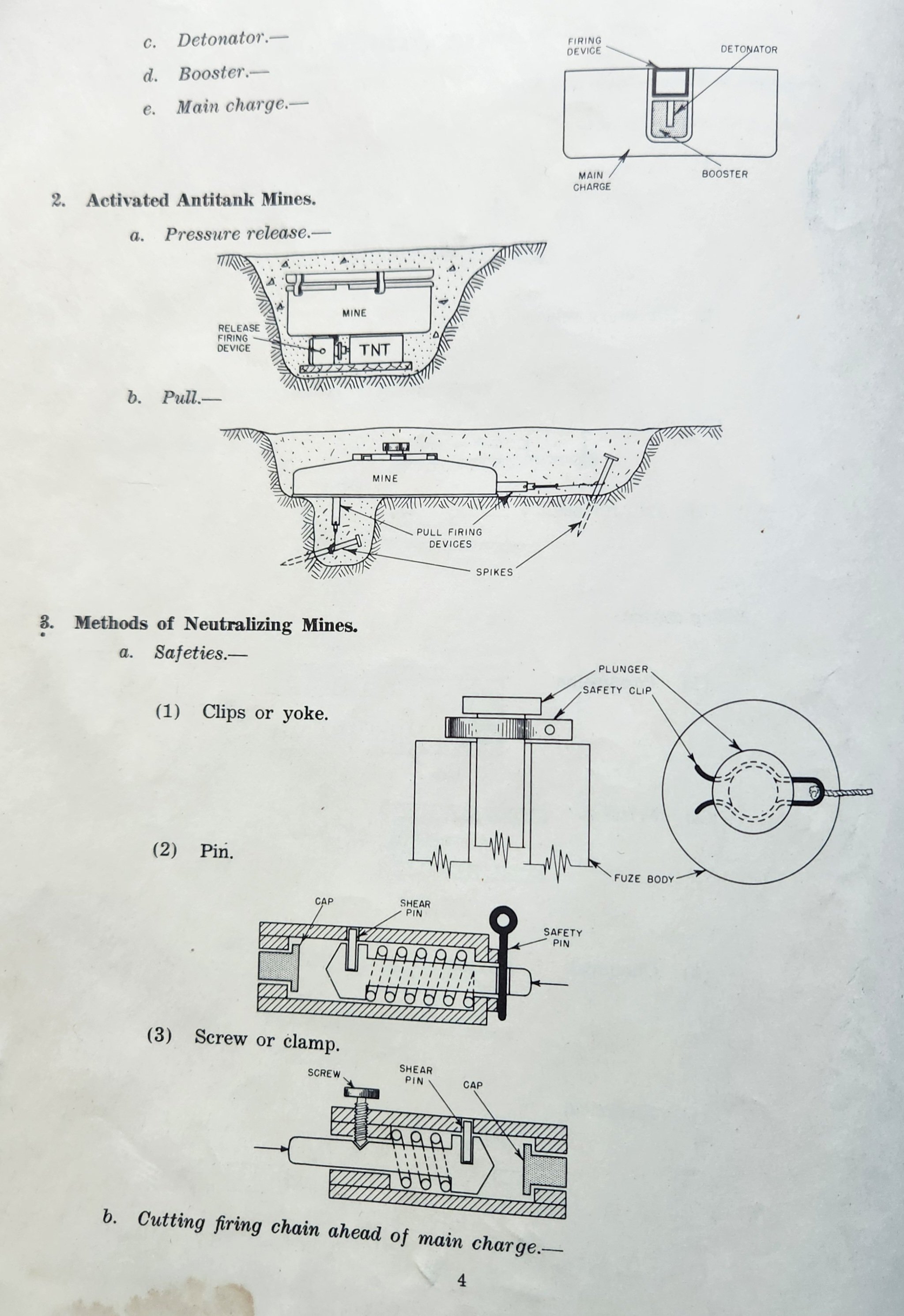
German mines presented a particular challenge because some were designed to be difficult to detect and could contain anti-handling features. Soldiers were therefore taught that an unknown mine or suspected explosive should never be treated casually.
The training at Camp Adair was part of a much larger effort to prepare American troops for the realities of modern warfare. Before these soldiers left Oregon for combat, they were expected to understand that danger could come not only from enemy soldiers and artillery, but also from weapons hidden beneath their feet.
For the men training at Camp Adair, learning about mines was another part of becoming combat-ready, and a lesson that could ultimately save their lives on the battlefields of Europe.